Subscribe via RSS Formspring Me! Hear my Tweets! Home About Blogs and Other Interests e-mail me!
Showing posts with label social. Show all posts

April 12, 2010

Cheaters, cheaters and more cheaters... (Did you ever watch that show?)

As a result of SNL this weekend, in which Tina Fey roundly criticized "Bombshell" McGee, the other party in the Jesse James affair, the bf and I got into a spirited debate.  I was of two minds after Fey's tirade in which she attempted to convey her support for jilted women everywhere by arguing that they shouldn't feel bad since "these" (reference to McGee) are the kinds of women they have to contend with taking their men.

Her points are well taken, I suppose, but I (and I will admit that I am a huge Sandra Bullock fan), have a hard time buying Fey's claim of celebrating womanhood while simultaneously calling any woman a whore, skank or slut, regardless of their actions. However well intentioned Fey's remarks might have been (Kristen Wiig donned a "Team Bullock" t-shirt), I'm rubbed the wrong way when a woman chooses to defame another woman - for any reason. Surely there was another way to show support for Bullock in this situation?

The bf's contention (if I understood him correctly) was that Fey could have easily criticized Jesse James instead (or even simultaneously) but that she deliberately chose to focus on McGee, calling her out on the basis of a lack of morality. But as much as I hate to see "Sandy" hurt by all of this, I'm forced to acknowledge that morality is a socially constructed concept that is not universal.  Moreover, (and the boyfriend totally disagrees with me on this), I don't feel that McGee has any obligation to uphold the vows entered into by either James or Bullock. Marriage is a social contract, engaged by two people. Not two people and the rest of the world - especially with the diminished role of the Church in articulating marital values.  Is it the rest of society's responsibility to keep James' John in his pants?  Whatever touchy-feely notions we have about the "rules" by which marriages (or even relationships) are governed, I am not convinced that this amounts to any obligation on society's part.  At best it is an expectation (realistic or otherwise) that others outside of the relationship will respect the confines by which the relationship (particular) operates. But to say that society articulates the parameters of that relationship? I'm just not buying it.

(As an aside, I had a conversation a few months back with a few relatives who were "gently" trying to get me to "see the light" where marriage was concerned, suggesting that relationships - marriages - that occur in performance - weddings - in front of family members and friends, are strengthened by the collective. Further to this is the notion that collective efforts are made to ensure the sanctity and longevity of the relationship. This argument really doesn't work for me, for a host of reasons, the least of which is the fact that most people don't know the details of a couple's relationship enough to put in any more than a token degree of effort. More often than not, intervention on behalf of "society" often results in dismal failures all round. But I digress...)

I will admit... most days I am not entirely sure where I stand on cheating. I don't do open relationships (read: have never done open relationships) and I've never cheated (by any of the definitions we're assuming in use here). But I do subscribe to the theory that life is short and, by extension, I am forced to acknowledge that as a result, people are inherently programmed to maximize their gain in a minimal amount of time.  On top of that, I typically feel that monogamy is also socially constructed, especially with indications of successfully functional polygamous/polyamorous societies throughout time. Maybe cheating is just the "logical" course of action for a species that does not want to die out.

What say you? Who would you hold responsible? To what degree?
  1. The cheater in the relationship
  2. The cheater outside of the relationship
  3. The cheater outside of the relationship (who doesn't know that Party A is married or otherwise involved)
  4. Both, equally
  5. Neither, equally
While I find it hard to absolve McGee of culpability in this instance, it's fairly easy to assume that had it not been her, it would have been someone else, if that was what James wanted. That just seems to be the way "cheating" works.

...Suffice it to say, between Tiger and Jesse, the conversations in our house have been numerous! :P

All that said, I have nothing but love for Sandra Bullock, abhor celebrity gossip, and must apologize for using this unfortunate story to extrapolate a larger discussion about relationships in general.

April 11, 2010

Now on Twitter!

Guess I can get that cute little bird for my blog after all!

I am still not sure what to make of it. I made an account so I could subscribe to an academic/activist.  I was surprised they even had a Twitter account. Still, it isn't Chat Roulette so I can't complain...too much. :P

If you want to follow me, here I am!

March 12, 2010

The Silence of my Biological Clock


Taken from a comment I left elsewhere...
I have never wanted kids.
I knew this as a kid, I know it now at the age of (almost) twenty-eight. I am often frustrated by married parents (or soon-to-be parents) who feel it necessary to suggest that I'm less of a person for willingly remaining child free.

Maybe it's selfishness, I don't know, but I don't see it that way. I "know" me. I know what I can and can't tolerate. I don't buy the notion that I'd magically feel different if they were my kids. The fact is, children require a long commitment that is as much emotional (if not more so) than it is physical and financial.  I am not prepared for that and I'm honest enough to admit it.

I think some people genuinely want to be and love being parents. Some people make great parents and I see genuine happiness in their faces when their kids are around or when they recount stories of their children. By contrast, I also believe that some people aren't all that happy about the burden of parenting (see Corinne Maier's "No Kids") but many people are too afraid to admit it.

One woman I know who has been married for several years and who has two young kids remarked to me recently (while at a wedding) that she thought it was great that I knew I didn't want children. She said that more people need to be honest with themselves and not cave to societal or familial pressure to "do the normal thing".

I wholeheartedly agree.

March 1, 2010

Earth Hour 2010: March 27th 8:30pm (Local time)


It shouldn't come as any surprise to see me posting this. Do you participate in Earth Hour? How 'green' are you the rest of the year?

February 24, 2010

Superwoman syndrome...

I have been having an unusually rough time lately.

It is, I am forced to acknowledge, almost entirely self-imposed, but in spite of my recognition of this fact, I still feel overwhelmed. Without delving too far into things (I'm not entirely sure how much I'm prepared to share on a public blog), I'll simply state that I've been more emotional than usual in the last few weeks and have increasingly felt as though I've lost control of everything (from school to home life and everything in between).

Before anybody jumps to any sort of conclusion, let me just put this out there:
No, I'm not pregnant.  This I can guarantee without any shred of doubt.

Anyway, in the midst of feeling what I've been feeling and attempting to deal with it (in many cases by ignoring it in pursuit of something more pleasant), I happened across this little snippet on the "Superwoman syndrome"; an apparently inherent drive to be perfect possessed by most women that (from my casual reading) also drives women crazy. *laugh*


As the article neatly summarizes, many women feel the need to seek outside stimulation in order to achieve perfection.  Historically, things like caffeine pills were the "drug" of choice (neato reference to Jessie Spano a la Saved by the Bell) but apparently, today's Superwoman indulges in something stronger. Personally, I haven't taken any medication, I rarely drink (alcohol) and I rarely indulge in caffeine. My chosen method of dealing with stress for the time being has been yoga (though I'm thinking more rigorous exercise might be required). Should I be amused that a male friend recently suggested I take pills (he was mainly suggesting vitamins, but has also suggested herbal supplements) to up my energy levels?

The way I see it, this problem is two-fold. How we deal with stress (and I use this loosely to denote the desire to be perfect) is the latter part of the issue.  Underlying this is the root cause, the drive to be perfect.  Where does it come from? Amongst what sorts of women does it emerge?  Is it the result of internalized ideas relating to gender stereotypes or does it come from external pressures imposed by men?  Is it related to gender at all?

It was a relief to realize that the frustrations I've been feeling have been shared by millions of women worldwide. It is not, however, a relief to realize that the "solution" is a drug-induced haze. Moreover, I'm not sure I appreciate the author's closing comment that women need to stop "comparing and complaining".  Surely this anxiety is rooted in something deeper than competition?

February 16, 2010

The Trouble with GDP

Kurt Kleiner provides an overview of the problems associated with using the Gross Domestic Product  (GDP) as an indicator of true societal wellbeing in Is Life Getting Better? in the Winter 2010 issue of U of T Magazine.


"What you measure affects what you do" (Joseph Stiglitz).

I am surprised it took us this long to figure it out.  Granted, asking whether or not life is getting better requires us to devise new and unique ways of measuring well-being.  After all, what is "well-being" if not measured by economic prosperity?  On what basis do we measure notions of "success" or "progress"?  How do we account for well-being at all if economics cannot be used to devise indices?

Kleiner asks much of the same questions as he recaps a recent report commissioned by economists Joseph Stiglitz and Amartya Sen and the findings are hardly groundbreaking. The GDP, while great at establishing a basis for the comparison of world economies fails to include in its calculations goods and services which are not paid for (e.g. housework or parenting).  It also fails to account for income distribution within society as a whole, effectively allowing income disparity to exist unchecked and unabated.  This is hardly surprising since the main purpose of the GDP has simply been to measure the total (economic) value of goods and services produced within a given country with little attention to much else.

Stiglitz and Sen (and by extension, Kleiner) were demonstrating the fact that the "unhealthy obsession" with the GDP masked many of the underlying signs which would have pointed to the recent global economic weakening. The article goes on to indicate that  in response to the recognized fallibility of the GDP, several attempts have been made to measure collective societal well-being.  Indices such as the UN Human Development Index provide an analysis which combines both GDP with health and education.  Other indices of arguably questionable veracity such as The Happy Planet Index measure things like "subjective life satisfaction" or "national happiness".  (Maybe it's just the titles that are throwing me off.)

As a student working to situate my interests somewhere in the realm of (international) environmental policy, I am most interested in the ways in which the GDP fails to account for environmental "goods"  (benefits) or"bads" (disbenefits). As Kleiner states, "GDP...doesn't include value judgments about how or why money is being spent. So if a steel manufacturer creates huge amounts of pollution, the cost of the steel it makes is added to national income but the harm from the pollution  doesn't show up as a debit." In theory, these new indicators (such as the Green Gross Domestic Product) would incorporate pollution or the benefit of clean water and air in their calculation of well-being but  even this requires that we unpack the problematic term well-being.

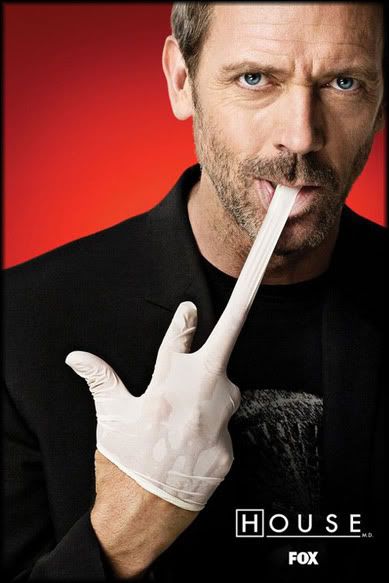
[H]ouse M.D. "Everybody lies."


So just what is well-being?  Is it an equitable concept amongst individuals and can it be extrapolated across the spectrum of society? Kleiner asks whether well-being and happiness are terms that should be conflated.  By extension, he also asks whether well-being is a "set of good life circumstances...associated with a subjective feeling of happiness"?  How do we know when people are happy?  (Kleiner gives a nod to psychology's field of "happiness studies", but I am reminded of [H]ouse's adage: "Everyone lies".)

My own interest takes this one step further and asks how environmental indicators can be folded into measures of happiness and conversely into measures of well-being.  I would argue that NIMBYism plays a large role in our ability to tolerate (and even accept) certain types of environmental disamenities. To that end:

Are you happy?
How happy are you?
Does your environment (natural or otherwise) have an impact on your happiness?
How would you measure well-being if not through GDP?

September 11, 2009

Settling for Mediocrity

Has The Female Fantasy Died or Transmogrified?

As has been my tendency of late (and almost always when procrastinating) I've become engaged with, and embroiled in, a non-academic debate.  Several of my friends have already been privy to this discussion (and so I'll save their sanity preemptively by stating that "Yes, it's the Movie Argument - again.")


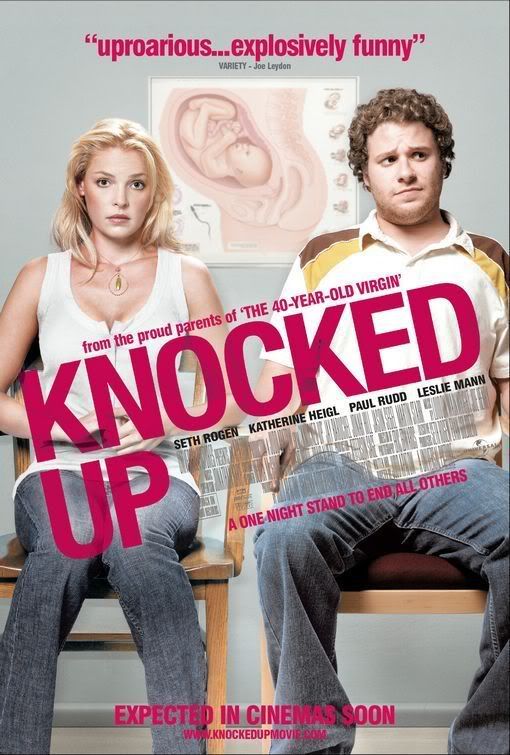
The "Movie Argument", for those of you who don't know, found its birth after a disappointing viewing of Judd Apatow's "Knocked Up".  Disappointing because I expected it to be a raunchy comedy delving into the male psyche, filled with potty humour and the obligatory fawning over naked women when instead, in addition to that (bearing in mind that there was not nearly enough of that, it turned into a sappy romantic comedy in which "everything worked out in the end".  Just when I was hoping Hollywood wouldn't do the happy ending and would finally grow some balls.
 
So why does this frustrate me? (Me, of all people, who fawns over romantic comedies and Harlequin historical romance novels...?!) 
 
White Knights With Pot-Bellies, In-Grown Toenails and a Bit of Potty Mouth
 
I submit that Mr. Apatow's foray into writing (increasingly as of late) is echoing an all-too disturbing recent media trend (see: King of Queens, Still Standing, According to Jim etc.) where a schlub makes off with an incredible (educated, ambitious, articulate, gorgeous, insert-appropriate-adjective-that-describes-his-exact-opposite-here) woman. In short, Apatow has carved out a delectable male fantasy in which his useless male lead (riddled with flaws) can still, by design or by colossal mistake of the cosmos, find, woo, and score his dream woman (and by extension the dream woman of the majority of his male audience).
 
Now before I get into my actual reasons for frustration, I'd like to highlight the two main positions taken by my male friends (with whom I've discussed this new rom-com phenomenon). 
 
First, I am told, I shouldn't find this at all frustrating because, reality being what it is, no guy, however charming (read: "funny") would score with a “10” unless he matched her in number or had a really large...wallet. Women in real life who meet the standards (that I perceive them as having) of the characters in these movies do not give the average schlub the time of day.  Perhaps, but I’m not entirely convinced of this.
 
Second, and here is where I see the argument becoming somewhat personal, I am told that these women are not everything I see them to be (or, if they are, these aren't necessarily positive character traits that men find endearing). Allowing some room for poetic license, my interpretation of this opinion is that “ambitious and driven” = “bitchy, hardheaded and opinionated” to a lot of men.  And of course "sexy/gorgeous" has always been an individual thing which means that strong, sexy female leads may be completely off-putting to some. (I was totally bowled over when my friend said he was disgusted by Katherine Heigl's character in Knocked Up. How could Heigl disgust anybody, ever?!)
 
But, of course, I am digressing.
 
My personal annoyance with this topic – as I’ve mentioned – started with Knocked Up but didn’t end there.  As I watched (with mounting frustration) I began to think about how often in recent media history this formula had played out.  Time and time again men that were not (in my estimation) on top of their gender’s hierarchy managed to secure women who were bringing their A-game in terms of looks, financial stability, intelligence (and the like).  In short, men with very little effort secured the cream of the crop, whereas women (at their peak) made out (pun intended) with the underdog.
 
So, I began asking, “where is the female counterpart?”  If we are to assume that all of these movies, sitcoms and the like are patterned after male fantasy, what the hell has Hollywood given women to fantasize about?  A pot-bellied dumpy guy who moves boxes all day (or worse yet, sits around smoking weed and “imagining” his dirty movie website, with nary a job prospect or intelligent thought in sight)?  Awesome!  Sign me up.  Better still…get me one for my non-existent sister.
 
What exactly are we coming to when it’s assumed that that’s the best a woman is able to do?  What message are we sending to women?!
 
I’m actually offended that Hollywood would be so narrowminded that they’d create a fantasy built for men and, by extension, tell women that this is the best they can ever hope to catch in a partner.  Totally okay for guys to let themselves go all to hell…but women have to keep it together if Jim (Belushi) is their dream man.
 
I’d rant about fairness, but as we know, life just ain’t fair.
 
Attack of the Schlumps (And Other Rotten Tomatoes)
 
In aptly titled "Eclipse of the Hunk", blogger Jeff Wells describes what he calls schlumps (a more fitting word I have yet to find!): “galumphy” guys who “look like real guys, which means almost never slender or buffed, and frequently chunky, overweight or obese. And usually with roundish faces with half-hearted beard growth, hair on their backs, man-boobs with tit hairs, blemishes, and always horribly dressed -- open-collared plaid dress shirts, low-thread-count T-shirts with lame-ass slogans or promotions on the chest, long shorts and sandals (or flip-flops), monkey feet, unpedicured toenails”.  These “upgraded” versions of the modern male (whatever happened to metro?) replace the traditional Brandos, Hudsons, Deans, DiCaprios, (Hugh and Carey) Grants and the like with a character/persona more fitting (and attainable) by everyday men.  Presumably, doing this will make the romantic comedy more appealing to the guys who invariably have to suffer the demands of their girlfriends.  The fantasy knight on a white horse (which leaves most men rolling their eyes and most women secretly yearning but outwardly scoffing) is now your Average Joe.  Mediocrity, it would seem, knows no bounds.
 
But just what is this reformed characterization really accomplishing?  Is it reinvigorating a new breed of men complacent in their schlumpiness?  Is it convincing women to settle upon a sack of potatoes in lieu of a husband (albeit a “funny” sack of potatoes where acerbic wit and stimulating intellectual conversation have been replaced by fart jokes?)
 
My male friends argue that no woman is going to watch these movies or TV shows and suddenly become convinced that the only thing missing from her life is a funny guy (with no discernable skills or marketability to his name).  Further, they argue that real life would NEVER pair a dumpy guy (ala Kevin James) with Amber Valletta (see: Hitch), no matter how colossal the intervention.  Apparently, that alone should be enough to convince me that my irritation is unnecessary.
 
But my frustration is mired in more than the superficial, even though I have an admittedly difficult time with these physically mismatched pairings.  I’m disgusted by the apathetic (read: slovenly) male leads who, especially in Apatow films, can barely muster the energy or interest to scratch their own asses.  How does this pass for humour?  Moreover, why do women (who apparently enjoy these movies!) graciously accept that behaviour as the norm?  If this is truly a reflection of society (and I’m not naïve enough to suggest that it is), doesn’t it demonstrate that women are surpassing men in every capacity?  Shouldn’t we then expect more from our partners?  Or have we collectively resigned to settling for “the best it’s gonna get”?
 
Where I think Hollywood proceeds to do even more damage is the notable lack of female versions of this stereotype – the barely ambitious, illogical, lazy, unattractive etc. – female who magically catches the eye of the man of her dreams because he manages to see past her tragic character flaws.  Where is the female who, in all aspects fails at life but is still “funny” enough to snag the attention of the cute guy at the ballpark/boardroom/dance club etc.?  From all accounts she simply doesn’t exist.
 
(A male friend has suggested that the implausibility of this occurrence is a result of the fact that women simply aren’t funny and thus such a character would be wholly unbelievable. We’ve since concluded that a female’s version of “funny” is “great tits” – but that is a topic for a separate discussion.)

The fat/dumpy/ditzy/stupid/whatever-she-is-that-makes-her-not-the-lead-heroine girl is almost always (if she exists at all) relegated to the position of “best friend”, “sidekick”, “confidante” or evil step-sister.  “We'll [never] ever see a lot of films where an average-looking, overweight woman scores a hot guy, because, frankly, men -- and most women -- won't pay to see that…women, in their heart-of-hearts, like to think they'd rather be with a nice guy who treats them well and wants to be with them than a Greek God who thinks the world revolves around him” (Voynar 2008).  Assuming that this is true, why does the double standard fail us so badly that we’re left with the Seth Rogens and Jason Segels of the world while men are left to fawn over Jolies and Johannsons?
 
The Ugly Truth 
 
It would appear that there is some validity in the idea behind Apatow’s pairings (whether he is consciously aware of it or not).  Researchers at the University of Tennessee, in a recent exploration of the influence of attractiveness upon marriage, have found that while attractiveness in women has a stabilizing effect upon marriage, attractiveness in men has the opposite.  “Evolutionary perspectives can help explain why men’s attractiveness, in both an absolute and relative sense, appeared to be more detrimental than beneficial to marriage: Attractive men have available to them more short-term mating opportunities…. It may be that wives are not adversely affected by being more attractive than their husbands because attractiveness is less important to women in long-term mating situations and equity only matters in terms of important resources” (McNulty et al. 2008, pg 141).
 
By this logic, Apatow’s construction is less fiction than it is reality (much to my eternal annoyance).  I would argue that his characters (like many of the others that have emerged in recent years in comedies) are not as well matched, even on a resource level, as McNulty et al. has suggested is important.  But, for argument’s sake, let’s say they were…
 
Since when did the Hollywood Dream Machine occupy itself with representing reality and positive messages?
 
Off the top of my head, the only equitable offering comparable to Apatow’s films which bring together a seemingly impossible match was the Farrelly Brothers’ 2001 “Shallow Hal”.  Again, by some “magical intervention” (see how implausible Hollywood makes such a reality?!) the outwardly unattractive Shanahan (Gwyneth Paltrow) is made beautiful to Larson (Jack Black) who is forced to look past her exterior to the wonderful person beneath. Yes, we get the importance of this message, but in a sense, even this logic is flawed.  Shanahan’s 300lb character, while beautiful to her audience, is still 300lbs. And at 300lbs (conventionally unattractive), Jack Black, her eventual love, is not handsome in any traditional sense (Hollywood or otherwise).  He’s the adorable, funny, dorky guy that women are supposedly secretly yearning for, but he’s no fantasy.  Paltrow’s character couldn’t have done any better (or so it seems to suggest), and thus the movie is a stunning failure in its attempt to send a positive message.  Would the movie have been less believable if we’d cast Colin Farrell or Brad Pitt in his place? I’d argue that at very least it would have put female fantasy on the same pedestal as the male fantasies which boost box office sales.
 
I get that Hollywood is in the business of constructing fantasy and that one should hardly be looking to the silver screen to be representative of what is taking place in society.  But if what’s good for the gander is Heigl, Alba and even Paltrow then why is the goose’s Clooney or Washington not rubbing elbows with Rachel Dratch’s Debbie Downer?
 
I guess we’re back to that whole “nice tits” thing.

District 9

I finally had the opportunity to see District 9 and, as predicted, I liked it. At first I was a bit put off by certain elements - I found they played too closely to stereotypical ideas and indicators of racism - but after a while, the images worked for me.
I'm keeping the rest of my feelings (some of them academic) about this film to myself, as there may be others who have not yet seen it, but I will make a few observations about theatre douchebags:
  1. Texting while in a darkened theatre is rude. Answering a phone call and having a complete conversation during the climax of a film should get you shot. Kudos to your friend for taking the phone away from you mid-conversation and telling you to STFU.

  2. Your 8 year old child (I assume that's how old he was) probably shouldn't be watching this movie (what with the violence and socio-political undertones and all.) I don't blame your child for asking you questions every two minutes (yes, literally every two minutes) because your son clearly didn't understand what was going on. I do, however, blame you for answering, and answering loudly. Moreover, I blame you for not setting a better example for your son as to proper theatre etiquette. How is he to know any better if you continuously engage him in conversation? And, when we finally called you out on it (because you were so oblivious to our five attempts at the obvious turn-back-and-stare), you actually had the audacity to say, "I'm watching this movie, too. No, I didn't talk through the whole thing." Clearly your son will never learn to take responsibility for himself with you at the helm.

    Go, go, gadget Douchebag!

    I was amused that you ran in the other direction when the credits rolled though. Clearly all five feet of me is very intimidating.

Follow Me!